
How to repressurise an Ideal Combination (combi) boiler safely
How to repressurise an Ideal Combination boiler
If the pressure on your Ideal Combination boiler has fallen, it can cause the central heating to shut down or the boiler to lock out. This guide explains how to repressurise an Ideal Combination boiler safely, what the pressure readings mean and when to contact a registered engineer. If anything here is unclear, please get in touch for a professional assessment.
Why boiler pressure matters
The system pressure gauge shows the pressure inside your central heating circuit. Most combination boilers are commissioned to an initial pressure between 1 and 2 bar. If the pressure drops below the installation setting and continues to fall, the system may have a leak or another fault. Operating with insufficient pressure can prevent the boiler from running correctly — notably, the boiler will not operate if pressure reduces to less than 0.3 bar.
When to repressurise
- You notice the pressure reading has dropped below the normal range on the gauge.
- The boiler displays a low-pressure fault or won’t fire up when the heating is requested.
- After bleeding radiators — sometimes pressure falls after you release trapped air.
Check the pressure when the system is cold for a consistent baseline reading. Aim to restore pressure to roughly 1–1.5 bar (or the value specified in your boiler handbook) rather than overfilling the system.
Safety first — what to check before you start
- Inspect for any obvious leaks around radiators, pipework, valves and the boiler. If there is an active leak, do not continue to top up the system — contact a Gas Safe Registered Engineer (or a Registered Gas Installer (RGII) in Ireland).
- Ensure the boiler is switched off and cool enough to handle any components.
- Keep a towel or container nearby — you may get some water spillage when disconnecting the filling loop.
Step-by-step: how to repressurise an Ideal Combination boiler
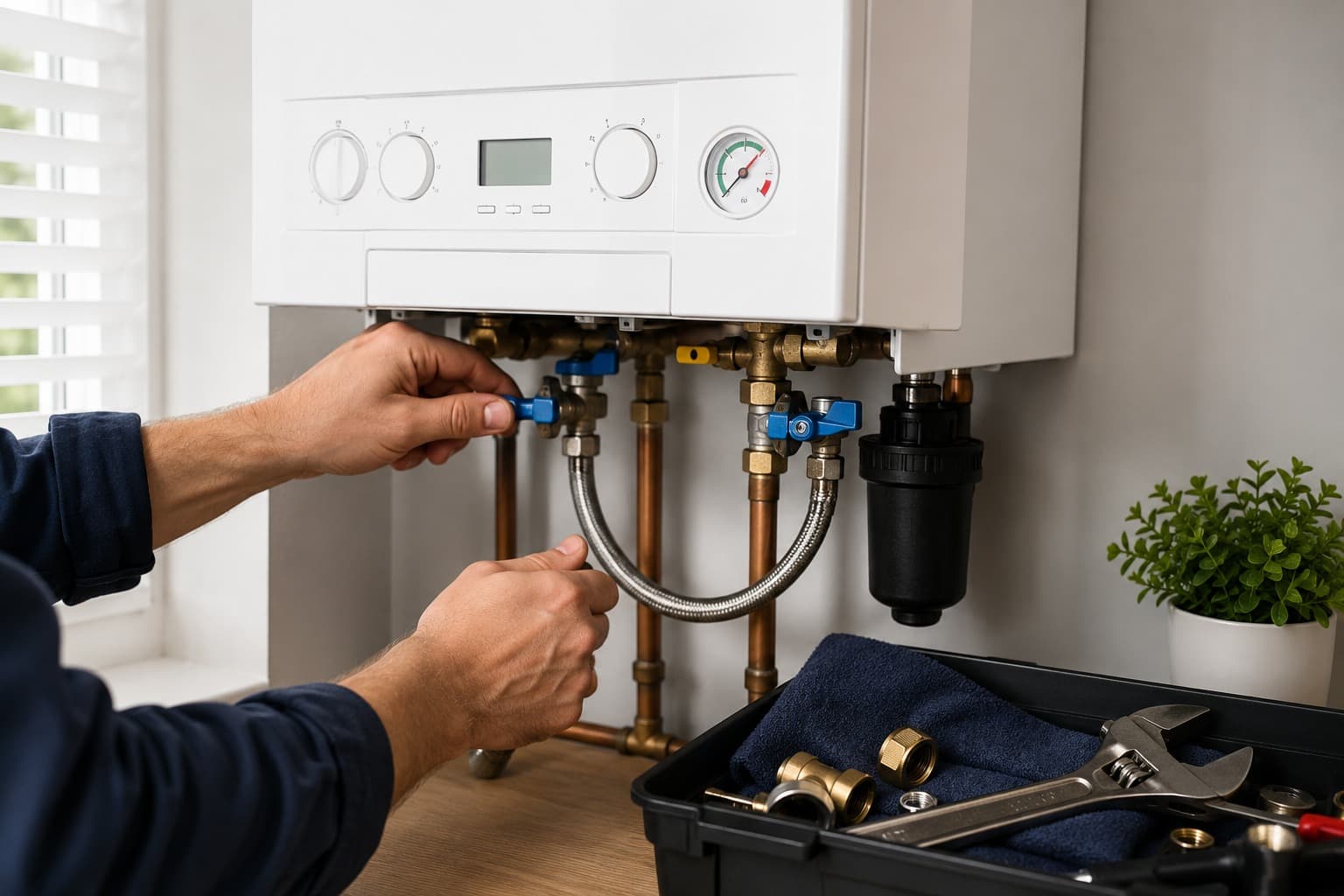
- Locate the filling loop and the two isolation handles commonly marked A and B (blue). These control water flow when you open the loop.
- Ensure both A and B handles are in the closed position before you begin.
- Remove the plug and cap from the filling loop and keep them safe for refitting later.
- Connect the filling loop to the Domestic Hot Water (DHW) inlet and tighten the connection. Check that the other end of the loop is connected and hand-tight.
- Turn the Domestic Hot Water (DHW) inlet valve (A — blue handle) to the horizontal position to allow water into the loop.
- With no visible leaks, gradually open the filling loop valve (B — blue handle) by turning it to the horizontal position. Do this slowly and watch the pressure gauge.
- Stop when the pressure gauge reaches about 1 to 1.5 bar or the value recommended in your boiler documentation.
- Turn valves A and B back to the closed position to isolate the filling loop.
- Disconnect the filling loop, replace the cap and plug. Expect a small amount of water to escape when you disconnect — wipe up any spillage.
Only use the built-in filling loop supplied with the boiler or a correct replacement. Do not leave the filling loop permanently connected — it must be removed and capped to prevent accidental overfilling or contamination of the system.
After re-pressurising — checks and common causes if pressure keeps dropping
Once the system shows the correct pressure, run the heating and check radiators are warming evenly. If the pressure continues to fall over days or weeks, there are several likely causes:
- Undetected leaks from radiators, valves, pipework or the boiler itself.
- Air release after bleeding radiators — bleed then check and top up the pressure again.
- A faulty pressure relief valve or expansion vessel that needs replacement or recharging.
- Corrosion or a fault in the heat exchanger or pump allowing water to escape from the sealed system.
If you cannot retain pressure, or you are unsure about any step, arrange a professional inspection. A Gas Safe Registered Engineer (or RGII in Ireland) can locate the fault, carry out safe repairs and test the system to current safety standards.
Need help from a local heating specialist?
7 Day Plumbing Services Ltd are a local heating and plumbing company based in Wilmslow, covering a 25‑mile radius including Bolton and Stoke-on-Trent. If you prefer an engineer to carry out the repressurising, find and fix the underlying issue, or book a routine inspection, contact us via our contact page or call 07896 487603. We also offer professional boiler servicing and boiler repair if you discover persistent problems.
For further reading and troubleshooting, return to the blog index: Back to Posts.
